---
title: What Is A Chiropractic Adjustment?
description: Go inside the science of a chiropractic adjustment and learn how precise, expert-led care may support pain relief, mobility, and better movement.
image: https://243995956.hs-sites-na2.com/hubfs/260605-What-is-a-Chiropractic-Adjustment.jpg
---

# Inside the Chiropractic Adjustment: How Expert Care Helps Restore Better Movement

# Inside the Chiropractic Adjustment: How Expert Care Helps Restore Better Movement
11 min read
## TL;DR
- A chiropractic adjustment is a precise, expert-led series of movements designed to restore joint motion and support better function.
- Doctors of Chiropractic may adjust joints throughout the body, including the spine, pelvis, ribs, shoulders, hips, wrists, knees, ankles, and feet.
- Chiropractic adjustments address subluxations, which refers to altered joint motion, reduced mobility, or impaired joint function.
- Improved joint motion may help ease stiffness, reduce mechanical stress, support muscle coordination, and improve everyday movement.
- The value of chiropractic care lives in the clinical expertise behind each adjustment: the right joint, the right technique, and the right reason.
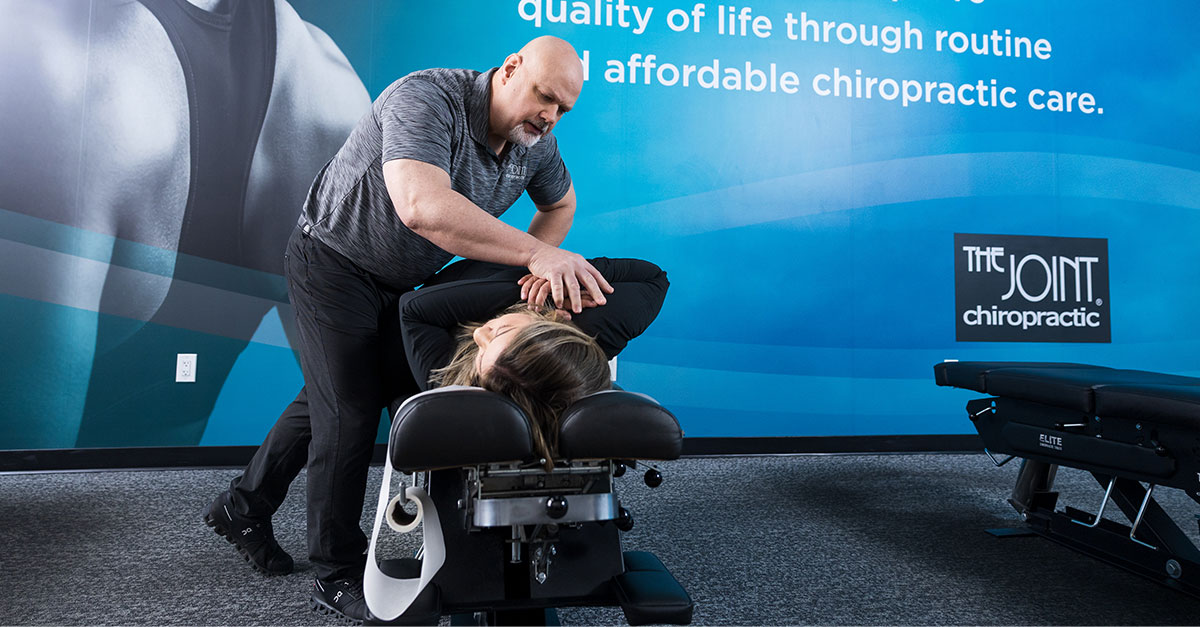
A chiropractic adjustment is a precise, hands-on series of movements performed by a licensed Doctor of Chiropractic to help restore joint motion, address subluxations, reduce mechanical stress, and support the way your body moves and functions.
It’s one of the most recognizable parts of chiropractic care, but the real value lives beneath the surface. An adjustment is a clinical decision, a biomechanical skill, and a targeted movement strategy shaped by years of training in anatomy, joint function, nervous system communication, and the way the body adapts to stress.
At The Joint Chiropractic, our licensed [Doctors of Chiropractic](https://www.thejoint.com/blog/chiropractic/are-chiropractors-doctors) evaluate joints throughout the body, including the neck, back, pelvis, ribs, shoulders, elbows, wrists, hands, hips, knees, ankles, feet, and other areas where restricted motion may affect comfort, mobility, and daily function.
Your body moves as one connected system. The foot influences the ankle. The ankle influences the knee. The knee influences the hip. The pelvis influences the low back. The ribs influence the upper back and shoulders. The neck influences posture, balance, tension, and head position. When one joint loses motion, the body adapts around the limitation.
A chiropractic adjustment helps restore motion where motion has become restricted. Better motion gives your body more options. More options may support less strain, better coordination, and movement that feels more natural in daily life.
## **How Chiropractic Adjustments Restore Joint Motion**
A chiropractic adjustment is a controlled, specific force applied to a joint to improve motion and function. Your Doctor of Chiropractic may perform the adjustment by hand, with a specialized table, or with an instrument, depending on your needs, comfort level, and clinical findings.
The goal is precision. Your Doctor of Chiropractic assesses how a joint moves, how nearby muscles respond, how the surrounding tissue feels, and how one area may influence another. The adjustment is delivered with a specific direction, speed, depth, and purpose.
A stretch may lengthen tissue. Massage may address muscle tension. Exercise may build strength and endurance. A chiropractic adjustment targets restricted joint motion with clinical intent.
During one visit, your Doctor of Chiropractic may adjust one joint or a series of joints. They may address the spine, pelvis, ribs, shoulder, wrist, hip, ankle, foot, or another joint based on the exam and movement assessment. Across a care plan, each visit may build on the last as your body adapts to restored motion and improved movement patterns.
The adjustment is the visible part of the visit. The assessment, clinical reasoning, and patient-specific technique give the adjustment its value.
## **Why Joint Motion Matters for Pain Relief and Mobility**
Every adjustment begins with the joint.
A joint is where two bones meet, but it’s also a living movement system. Each joint includes cartilage, ligaments, a joint capsule, synovial fluid, connective tissue, muscles, tendons, blood supply, and sensory nerve endings. Each joint has a range of motion designed for its role in the body.
Some joints move through big, expressive ranges, like the shoulder and hip. Others move in smaller, highly coordinated ways, like the joints of the spine, ribs, hands, and feet. Together, those joints help you walk, lift, turn, reach, bend, balance, breathe, grip, exercise, work, and recover.
When a joint moves well, your body can distribute force more efficiently. Muscles can contract and relax with better timing. Connective tissue can glide with less resistance. Nearby joints can do their own jobs instead of taking on extra work.
When a joint loses motion, the body creates a workaround. Muscles may tighten to protect the area. Other joints may move more to make up for the joint moving less. The nervous system may become more alert to stress in the region. Movement may start to feel stiff, guarded, uneven, or painful.
A chiropractic adjustment helps restore better motion to the affected joint. In daily life, that may mean your neck turns with more ease, your shoulder reaches with less tension, your low back feels less locked, your hip moves with more freedom, or your ankle feels more stable during walking.
## **Subluxation and Chiropractic Adjustments**
In chiropractic care, a [subluxation](https://www.thejoint.com/blog/chiropractic/what-is-a-subluxation) refers to a joint or group of joints with altered motion, reduced mobility, or impaired function. A subluxation may feel like stiffness, tightness, irritation, pressure, or a sense that an area has lost its normal movement rhythm.
A subluxation may develop after an injury, and it can also build gradually through everyday repetition. Sitting for long hours, carrying a child on one hip, sleeping in an awkward position, looking down at a phone, lifting at work, training hard, driving often, standing on hard floors, wearing unsupportive shoes, or moving through stress can all influence joint motion over time.
Your body is highly adaptable. That adaptability helps you keep going through busy days, physical demands, and changing routines. Over time, your body may accept restricted motion as its new normal until another area begins to feel the strain.
A restricted ankle may contribute to knee or hip stress. Limited rib motion may influence shoulder or upper-back tension. Pelvic restriction may affect low-back mechanics. Neck restriction may influence headaches related to muscle tension or posture-related strain.
Chiropractic adjustments address subluxations by improving joint motion and reducing mechanical interference in the way your body moves. For a deeper explanation of this concept, link to the full subluxation article here.
## **Doctors of Chiropractic Adjust Joints Throughout the Body**
The spine plays a major role in chiropractic care because it protects the spinal cord, supports posture, anchors movement, and contains many joints rich with sensory information. Chiropractic care also includes the wider musculoskeletal system, which includes joints, muscles, ligaments, tendons, fascia, posture, and movement patterns throughout the body.
Doctors of Chiropractic are trained to evaluate how these systems work together. They look at where motion has changed, where muscles are guarding, where force is being absorbed, and how one region may be influencing another.
Pain gives important information, but movement often tells a deeper story. A runner with knee discomfort may also have restrictions in the hip, ankle, or foot. A person with shoulder pain may have altered motion in the ribs, neck, or upper back. Someone with low-back discomfort may have restricted pelvic, hip, or mid-back motion contributing to the way force moves through the body.
Your Doctor of Chiropractic looks for those relationships. The exam may include posture, range of motion, joint motion, muscle tone, tenderness, movement quality, and patient history. From there, your Doctor of Chiropractic determines which joints may benefit from an adjustment and which techniques fit your body best.
The goal is to understand movement, restore motion, and help your body function with greater ease.
## **How a Series of Chiropractic Adjustments Supports Better Movement**
People often use the phrase “an adjustment” as a simple way to describe a chiropractic visit. In practice, a visit may include a series of adjustments, and a care plan may include a series of visits.
During one appointment, your Doctor of Chiropractic may adjust several restricted joints. Those adjustments may address different parts of the body because one region often influences another. A neck adjustment may be paired with upper-back or rib work. A low-back adjustment may involve the pelvis or hips. A shoulder concern may include evaluation of the neck, ribs, and thoracic spine. A foot or ankle restriction may matter for gait, balance, and lower-body mechanics.
Across several visits, your body may begin to respond more consistently. Restricted joints may regain motion. Muscles may guard less. Movement patterns may become more efficient. You may become more aware of posture, lifting habits, sleep position, or repetitive movements contributing to recurring tension.
This cumulative process is one reason chiropractic care can be so meaningful. The goal is to support the body as it relearns better movement.
## **What Happens During a Chiropractic Adjustment**
A chiropractic adjustment begins with assessment.
Your Doctor of Chiropractic evaluates where motion is restricted, how the surrounding tissue responds, and what your body can comfortably tolerate. They may use their hands to feel joint motion and tissue tension. They may ask you to move in specific ways. They may review symptoms, lifestyle factors, injury history, posture, work demands, or activity levels.
Once your Doctor of Chiropractic identifies the joint or joints to adjust, they position your body carefully. The adjustment is delivered with a controlled impulse into the joint’s restricted range of motion. The movement is quick, specific, and intentional.
The adjustment may create an audible release called cavitation. Cavitation happens when pressure changes inside the joint and gas releases from the fluid within the joint space. Some adjustments create an audible release. Others work through quieter techniques. The clinical goal stays focused on improved joint motion.
Different patients may receive different techniques. Your Doctor of Chiropractic may use manual adjusting, drop-table techniques, instrument-assisted adjustments, gentle mobilization, or other approaches depending on your needs, comfort level, body type, age, and clinical presentation.
The adjustment is tailored to the person, the joint, and the clinical goal.
## **Structural Effects of Chiropractic Adjustments on Joints and Muscles**
The structural effects of a chiropractic adjustment involve the physical tissues responsible for movement: joints, muscles, ligaments, tendons, fascia, cartilage, and the joint capsule.
When a restricted joint is adjusted, the goal is to improve how that joint moves. Better motion may help reduce stiffness, improve range of motion, and reduce mechanical stress on nearby tissues. The joint may glide more freely. Surrounding muscles may have less need to brace or guard. The body may distribute movement more evenly.
That structural change can influence daily movement. A hip that moves better may help walking feel smoother. A wrist with improved motion may make gripping or typing feel easier. A rib that moves better may reduce tightness through the mid-back. A pelvis with improved motion may support more comfortable standing, bending, or lifting. A shoulder with better mobility may make reaching overhead feel more natural.
Muscle function is closely connected to joint motion. Muscles attach to bones and respond to joint position. When a joint is restricted, muscles around that joint may become overactive, underactive, shortened, strained, or poorly coordinated. Once joint motion improves, muscle activity may become more balanced.
This is one reason people often describe feeling lighter, looser, or more mobile after an adjustment. The body may be spending less energy protecting, compensating, or stabilizing around a restricted joint.
## **Neurological Effects of Chiropractic Adjustments on Movement Control**
Your joints are filled with sensory receptors that help your brain understand movement, position, pressure, and force. This awareness is called proprioception. It’s how you know where your body is in space without watching every step, reach, or turn.
Proprioception helps you walk, balance, lift, react, and coordinate movement. It also helps your nervous system determine how much muscle tone is needed for a task. When joint motion changes, the sensory information from that joint can change too. The body may respond with stiffness, guarding, altered movement, or increased sensitivity.
A chiropractic adjustment may help improve motion input from the joint. Better input may support better coordination between the joint, the surrounding muscles, and the nervous system.
This is where chiropractic care becomes both mechanical and neurological. Joints are sensory-rich structures constantly communicating with the brain and body. Better joint motion can support clearer movement feedback, more efficient muscle coordination, and a stronger sense of body control.
## **Chiropractic Adjustments, Inflammation, and Irritated Tissue**
Inflammation is part of the body’s natural repair process. It helps protect tissue after irritation, overload, or injury. When mechanical stress continues, [inflammation](https://www.thejoint.com/blog/wellness/what-is-inflammation-and-why-is-it-important) may contribute to soreness, swelling, stiffness, and limited motion.
A restricted joint can create stress in the surrounding tissues. The joint may move with less ease. Nearby muscles may tighten. Connective tissue may become irritated. The body may create a protective response to limit movement in the area.
By improving joint mechanics, a chiropractic adjustment may help reduce the stress contributing to irritation. That can support a healthier environment for tissue recovery and more comfortable movement. Chiropractic care helps address mechanical factors that may be feeding the problem.
For patients, this can feel like less pressure, less tightness, or more freedom to move. The experience varies from person to person, but the clinical goal remains the same: restore motion, reduce restriction, and support function.
## **Benefits of Chiropractic Adjustments for Everyday Movement**
Chiropractic adjustments [may help support](https://www.thejoint.com/blog/chiropractic/guide-to-benefits-chiropractic-care-basics) pain relief, restored movement, improved range of motion, reduced stiffness, better flexibility, improved muscle coordination, and more efficient movement patterns.
People often seek chiropractic care for back pain, neck pain, joint pain, headaches related to muscle tension, posture-related strain, sports-related stress, work-related discomfort, and movement limitations caused by daily life.
Because Doctors of Chiropractic evaluate the whole musculoskeletal system, care may also support areas throughout the body. A patient may receive care for shoulder mobility, hip mechanics, wrist restriction, ankle stiffness, rib motion, or pelvic alignment when those areas affect movement and comfort.
At The Joint Chiropractic, our focus is clear: We relieve pain and restore movement so you can live fully. Through quality, convenient, and affordable care, our Doctors of Chiropractic help patients understand how their bodies move, where restrictions may be present, and how chiropractic adjustments may support better function.
## **Why Chiropractic Adjustment Expertise Matters**
A chiropractic adjustment may take only a moment, but the [education behind it takes years](https://www.thejoint.com/blog/chiropractic/how-to-select-the-best-chiropractor).
Doctors of Chiropractic study anatomy, physiology, biomechanics, neurology, radiology, diagnosis, joint function, muscle function, movement assessment, and adjusting techniques. They’re trained to evaluate the musculoskeletal system and determine when chiropractic care is appropriate.
That training matters because no two bodies move exactly the same way. The same symptom can have different contributing factors. The same joint can require a different approach from one patient to another. The same technique may need to be adapted based on the person receiving care.
Your Doctor of Chiropractic must decide which joint to adjust, which direction to move it, how much force to use, which technique fits your body, and whether another form of care or referral is needed. That clinical judgment is the heart of chiropractic care.
The adjustment is the visible part. The assessment, decision-making, skill, and patient-specific care are what make the experience meaningful.
## **Convenient Chiropractic Adjustments at The Joint Chiropractic**
The Joint Chiropractic makes chiropractic care easier to access through convenient locations, walk-in visits, evening and weekend hours at many locations, and affordable pricing without insurance.
That convenience matters because pain, stiffness, and restricted motion can affect how you work, sleep, exercise, drive, travel, parent, and move through the day. Access to a licensed Doctor of Chiropractic can help patients address those concerns as part of everyday life.
Our care model supports people who want straightforward, high-quality chiropractic care from licensed Doctors of Chiropractic. Whether you’re seeking relief from discomfort, support for better mobility, or care to help you keep moving through a busy life, The Joint Chiropractic is designed to make that next step easier.
## **The Bottom Line On Chiropractic Adjustments**
A chiropractic adjustment is a precise, clinician-led series of movements designed to restore better joint motion, address subluxations, reduce mechanical stress, and support the way your body moves and functions.
Doctors of Chiropractic evaluate the body as a connected system and may adjust joints throughout the body when clinically appropriate. The value of an adjustment lives in its specificity: the right movement, applied to the right joint, for the right reason, by a trained Doctor of Chiropractic who understands how structure, motion, muscle function, and nervous system input work together.
At The Joint Chiropractic, our licensed Doctors of Chiropractic help relieve pain and restore movement through quality, convenient, and affordable care. Walk in when you’re ready to move through life with more ease, confidence, and freedom.
## **Chiropractic Adjustment FAQs**
### **What is a chiropractic adjustment?**
A chiropractic adjustment is a precise, controlled movement applied to a joint by a licensed Doctor of Chiropractic. The goal is to improve joint motion, address subluxations, reduce mechanical stress, and support better movement and function.
### **Do chiropractors adjust joints throughout the body?**
Doctors of Chiropractic evaluate and adjust joints throughout the body when clinically appropriate, including the spine, pelvis, ribs, shoulders, elbows, wrists, hands, hips, knees, ankles, and feet.
### **What is a subluxation?**
A subluxation refers to altered joint motion, reduced mobility, or impaired joint function. In chiropractic care, a subluxation may contribute to stiffness, discomfort, compensation, or restricted movement.
### **Why does a chiropractic adjustment make a popping sound?**
The popping sound comes from gas releasing inside the joint as pressure changes. This release is called cavitation. Some adjustments create a sound, and others use quieter techniques focused on restoring motion.
### **How many adjustments happen during one visit?**
A visit may include one adjustment or a series of adjustments, depending on your Doctor of Chiropractic’s findings. Your doctor may address multiple joints when several areas show restricted motion or contribute to your movement pattern.
### **Can chiropractic adjustments help with joints outside the back and neck?**
Chiropractic adjustments may help support motion and function in joints throughout the body. Doctors of Chiropractic may evaluate and adjust areas such as the shoulders, hips, wrists, knees, ankles, feet, ribs, and pelvis when appropriate.
### **What should you feel after a chiropractic adjustment?**
Responses vary. Some people feel more mobile, less stiff, or more comfortable after an adjustment. Others may feel mild soreness as the body adapts, similar to the way muscles can feel after activity. Your Doctor of Chiropractic can help you understand what to expect based on your care needs.
---
*The information, including but not limited to text, graphics, images, and other material contained on this page, is for informational purposes only. The purpose of this post is to promote broad consumer understanding and knowledge of various health topics, including but not limited to the benefits of chiropractic care, exercise, and nutrition. It is not intended to provide or be a substitute for professional medical advice, diagnosis, or treatment. Always seek the advice of your chiropractor, physician, or other qualified health care provider with any questions you may have regarding a medical condition or treatment and before undertaking a new health care regimen, and never disregard professional medical advice or delay in seeking it because of something you have read on this page.*
Clinically reviewed by [Dr. Dustin DebRoy, D.C.](https://243995956.hs-sites-na2.com/blog/reviewers/dustin-debroy)
Written by Janett King
Read about the author
Janett King is a seasoned content writer with more than twenty years of experience writing about health and wellness, supplements, and K-12 and post-secondary education. She focuses on making complex topics easy to understand, so you can feel informed, supported, and confident as you make decisions about your health.
---
[Chiro 101](https://243995956.hs-sites-na2.com/blog/chiropractic) [Adjustment](https://243995956.hs-sites-na2.com/blog/search?q=Adjustment) [Are Chiropractors Doctors?](https://243995956.hs-sites-na2.com/blog/search?q=Are+Chiropractors+Doctors%3F) [Chiropractic](https://243995956.hs-sites-na2.com/blog/search?q=Chiropractic) [Chiropractic Treatments](https://243995956.hs-sites-na2.com/blog/search?q=Chiropractic+Treatments) [chiropractic adjustment](https://243995956.hs-sites-na2.com/blog/search?q=chiropractic+adjustment) [chiropractor](https://243995956.hs-sites-na2.com/blog/search?q=chiropractor)
## Find A Chiropractor Near You
Enter your zip code
Find A Clinic
Find locations, hours, and walk-in availability near you.
## Related Articles
[
### The 30-Day Posture Challenge to Help You Stand Taller and Move Better
Read now
](https://243995956.hs-sites-na2.com/blog/chiropractic/30-day-posture-challenge)
[
### What Does Good Posture Look Like?
Read now
](https://243995956.hs-sites-na2.com/blog/chiropractic/what-does-good-posture-look-like)
[
### Chiropractic Care For Stress Relief: Feel Better, Move Easier, Think Clearer
Read now
](https://243995956.hs-sites-na2.com/blog/chiropractic/how-chiropractic-care-supports-stress-relief)
[
### Chiropractic 101: The Ultimate Guide To Understanding The Benefits Of Chiropractic Care
Read now
](https://243995956.hs-sites-na2.com/blog/chiropractic/guide-to-benefits-chiropractic-care-basics)
$
29
*
New patient special
## Consultation, Exam, and Adjustment
Get started today and we’ll match you with a nearby clinic.
[ start your offer ](https://www.thejoint.com/introductory-offer)
Not interested
```json
{
"@context" : "https://schema.org",
"@type" : "BlogPosting",
"author" : {
"@type" : "Person",
"name" : "Janett King",
"url" : "https://243995956.hs-sites-na2.com/blog/chiropractic/author/janett-king"
},
"dateModified" : "2026-06-16T04:00:00.575Z",
"datePublished" : "2020-09-02T13:00:00.000Z",
"headline" : "What Is A Chiropractic Adjustment?",
"image" : [ "https://243995956.hs-sites-na2.com/hubfs/260605-What-is-a-Chiropractic-Adjustment.jpg" ],
"mainEntityOfPage" : {
"@id" : "https://243995956.hs-sites-na2.com/blog/chiropractic/what-is-a-chiropractic-adjustment",
"@type" : "WebPage"
},
"publisher" : {
"@type" : "Organization",
"logo" : {
"@type" : "ImageObject"
}
}
}
```