Important Message from The Joint Chiropractic regarding COVID-19 (Novel Coronavirus) - Read More

Chiropractic For Men: Support How You Work, Train, And Recover

Men typically approach wellness in practical terms. You want your body to keep up at work, in the gym, at home, and over time. How you move and recover plays a big role in how capable and confident you feel day to day. Chiropractic for men aims to support mobility, range of motion, and muscle tension management so you can move through daily demands with more comfort and control.

Find Relief Near You

How Everyday Habits Impact Men’s Health

Your body adapts to whatever you repeat, even when your days look nothing alike.

Men carry different kinds of “load.” For some, it’s long hours at a desk and the mental pressure of staying on. For others, it’s time on your feet, shift work, unpredictable calls, heavy gear, lifting, climbing, kneeling, or absorbing impact. Athletes and recreational lifters stack training stress on top of work and life stress. Parenting adds its own layer, carrying kids, bending into cribs, hauling strollers and bags, getting down on the floor, and doing it all on limited sleep. Different routines, same reality: when your body repeats the same demands often enough, it starts to build a “normal” that can shape how you feel, move, and recover.

It’s not just what you do. It’s the combination of load, posture, and recovery time.

Physical jobs can create wear from repetition and force, like carrying, bracing, twisting, and working in awkward positions. Desk-heavy days can create strain from staying still too long. High-responsibility roles can keep your nervous system in go mode, which may show up as tighter muscles, shallower breathing, and less effective recovery. Training adds another layer, especially when sleep, hydration, and fueling do not keep pace. Parenting can compress recovery even further, with early mornings, interrupted nights, and fewer true breaks. When the balance starts to slip, you might notice stiffness that lingers, reduced range of motion, or a body that feels less resilient than it used to. Small resets, consistent sleep, basic mobility, and smart recovery habits help protect your baseline so you can keep doing what your life asks of you.

Common Physical Challenges Men Experience

Often, men are conditioned to push through discomfort. You may adjust your form, power through soreness, or tell yourself it’s just part of getting older. While those strategies may keep you moving short term, they don’t always address how your spine and joints are working together.

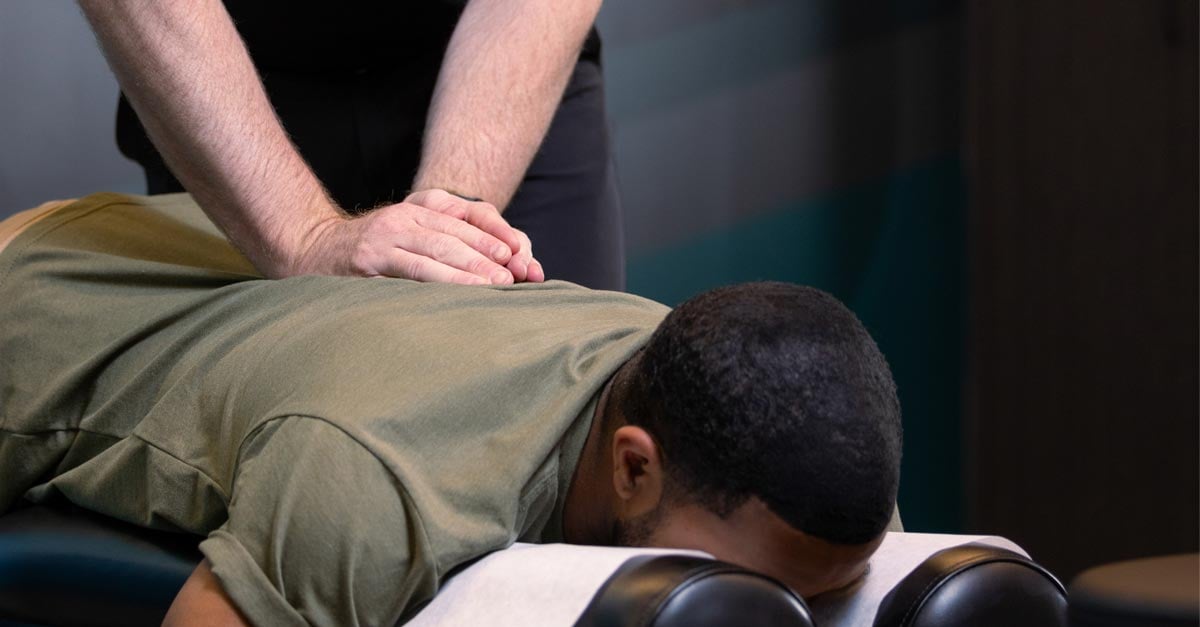
That’s why many men seek chiropractic adjustments for support. Working with a men’s chiropractor focuses on restoring balance, reducing unnecessary strain, and supporting movement patterns so your body can perform consistently day after day.

Why do men commonly experience stiffness and discomfort?

  • Repetitive lifting at work, in training, or at home
  • Long periods of sitting, driving, or commuting
  • High-intensity workouts with limited recovery
  • Tight hips and restricted mobility
  • Lower back tension from posture or load
  • Stress that shows up physically in the body

When movement feels restricted, confidence often takes a hit. Chiropractic care may help restore balance so you can move with more control, stability, and trust in your body again.

Who-Should-Consider-Chiropractic-img
People at risk for upper back pain

Chiropractic For Men In Real Life: Work, Parenting, Training, And Stress

Whether you’re moving equipment, lifting at work, loading a truck, or picking up a kid a hundred times a week, your body relies on coordination, not just strength. Your spine, hips, and shoulders have to share the load while your core stabilizes and your breathing stays steady. Chiropractic adjustments may help support alignment and joint motion, which can make lifting feel more stable and controlled. We also look at movement patterns and repetitive positions that can quietly add strain over time.

Long stretches of sitting, driving, or being in one position can change how your body moves when you finally stand up and go. Hips can feel tight, the low back can feel stiff, and the upper back and neck can carry more tension, especially with screen time or long commutes. Chiropractic care may help support mobility and joint motion, so transitions like getting out of the car, walking after meetings, or moving into activity feel smoother. Small movement breaks and basic mobility work can also help your body stay more adaptable day to day.

Progress isn’t only about adding weight. It’s also about how well you move under load. Squats, deadlifts, overhead lifts, and rotational work all ask for joint motion, stability, and good positioning through the spine, hips, and shoulders. Chiropractic adjustments may help support posture, joint balance, and range of motion so workouts feel more efficient and less restricted. When movement quality is dialed in, warmups can feel easier and form can feel more consistent across sets.

Hip mobility affects how you walk, hinge, rotate, and absorb impact. When your hips feel tight or imbalanced, other areas may try to compensate, like your low back, knees, or even the upper back during twisting and lifting. This can show up as groin tightness, hip flexor tension, or a “stuck” feeling during squats, running, golf, or climbing. Chiropractic adjustments may help address joint motion and movement patterns that influence how your hips, pelvis, and spine work together.

Recovery is what helps your body keep showing up, especially when you’re balancing work, parenting, training, and uneven sleep. Muscle soreness can be normal, but lingering tightness and stiffness can make it harder to move well the next day. Chiropractic care may support recovery by improving joint motion and helping reduce the tension that can build when muscles stay guarded. Pairing care with smart basics, like walking, hydration, mobility work, and consistent sleep habits, can help your body reset more effectively between demands.

Stress shows up through the whole system. Emotional stress can change breathing and muscle tone. Physical stress can come from repetitive movement, impact, or long hours in one position. Chemical stress can come from poor sleep, dehydration, inflammation, and habits that leave your body running on fumes. When those pressures stack, it can look like tight shoulders, a tense neck, headaches, shallow breathing, or a body that never fully downshifts. Chiropractic care aims to support spinal balance and healthy joint motion, which may help reduce the physical tension that builds when your system stays in high gear.

Benefits Of Chiropractic Care For Men

Routine chiropractic care for men may support improvements that matter in your daily life and long-term health.

decompression-img

Improved Mobility And Strength

Supporting joint motion may help you maintain strength through full, usable ranges of movement.

stress-relief-img

Better Posture And Physical Confidence

Better alignment may support how you carry yourself, helping you feel more stable and in control.

sleep-quality-img

Natural Pain Relief

Chiropractic care offers a drug-free approach to help you manage tension in the back, neck, hips, and shoulders.

mind-body-img

Improved Recovery between activities

Efficient movement may help your body recover faster between work, workouts, and long days.

mobility-flexibility-img

Sustained Energy And Vitality

When your body moves better, it often takes less effort to get through the day.

mobility-flexibility-img

Longevity And Staying Active

Supporting joint health and mobility may help you stay active and independent as you age.

Men’s Health By The Numbers

Men’s Health Chiropractic  By The Numbers

of men have reported back pain in the past three months.1

Men’s Health Chiropractic

of exercise-related injuries occur in men, often in the lower back, shoulders, or knees during gym workouts, sports, or activity.2

Men’s Health Chiropractic

of men experience chronic pain, affecting work, activity, and daily comfort3

Men’s Health Chiropractic

of men have diagnosed arthritis, which often contributes to ongoing joint discomfort or stiffness.4

Chiropractic Care At The Joint

We believe pain should never stand in the way of your life. Our licensed doctors provide chiropractic care for men that may help improve mobility, restore function, and support your body’s ability to recover. Whether you’re focused on performance now or building a long-term wellness routine, consistent chiropractic care may help you move with greater ease and get back to the things you love.

Why More Than 12 Million People Choose Us Each Year

  • Personalized care from licensed doctors of chiropractic
  • Same-day visits with no appointment required
  • Open evenings and weekends
  • Transparent pricing with no insurance needed
  • Nationwide access to your treatment plan
  • Quick visits that fit into your day
  • Family-friendly care for all ages
  • Mobile app check-in and visit history

Millions of people each year trust The Joint to help them move better, live better, and do more of what matters most. Wherever you are in life, we make exceptional chiropractic care for men simple, affordable, and always within reach.

Frequently Asked Questions About Chiropractic For Men

Chiropractic care does not treat low testosterone. However, many men include chiropractic adjustments as part of a broader wellness routine for men that may support physical resilience, movement efficiency, and overall vitality.

Chiropractic adjustments focus on spinal alignment and joint motion. While they do not directly balance hormones, supporting nervous system function and physical movement may contribute to overall wellness and sustained energy as part of a healthy lifestyle.

The sound you may hear is gas releasing from the joints as motion is restored. Chiropractic adjustments aim to support joint movement, flexibility, and comfort so your body can move with better control and confidence.

Chiropractic for men can be beneficial because it focuses on how your spine and joints move and function, which influences everything from how you lift and carry to how you sit, stand, rotate, and recover. When life includes repeated demands, whether that is physical work, long commutes, workouts, parenting, or a high-stress schedule, it is common for movement to get tighter and less efficient over time. With consistent care, chiropractic adjustments may help support joint motion, mobility, and posture so your body can move with less strain. Many men also seek chiropractic care as a drug-free option for managing tension and discomfort in areas that tend to take the hit, like the low back, neck, shoulders, and hips.

Over the long term, the value is often in staying steady. When movement feels smoother, and recovery is more reliable, it can be easier to keep up with the activities you care about, maintain confidence in your body, and protect your ability to stay active as you age. Results vary from person to person, but the goal is practical: support how you move day to day, so life feels more doable and less limiting.


Visit frequency depends on your activity level, recovery needs, and how your body responds to care. Your chiropractor can help guide a plan that supports performance, durability, and long-term movement health.

Stiffness, reduced range of motion, recurring discomfort, or feeling less stable during movement may signal that your body could benefit from evaluation. These are often early signs that movement patterns are becoming less efficient.

At The Joint Chiropractic, we don’t bill or accept traditional insurance. Instead, we offer affordable chiropractic care with transparent pricing, so you can get care without dealing with insurance claims, prior approvals, deductibles, or surprise costs. If you have an HSA or FSA eligibility for chiropractic services at any location, and we can provide detailed receipts for recordkeeping.

Most visits at The Joint Chiropractic take about 10 to 15 minutes, making it easy to fit chiropractic care into a busy schedule without disrupting work, training, or recovery time.

Chiropractors do not treat groin injuries directly, but they may assess the spine, hips, and pelvis to identify movement patterns or joint restrictions that could be contributing to discomfort or limited performance.

Groin pain may stem from muscle strain, hip mechanics, posture, or repetitive movement patterns. Limited mobility or imbalance in surrounding joints can place extra stress on the area during activity.

Spinal or pelvic alignment issues may influence how surrounding muscles and nerves function. Over time, this can affect strength, balance, and comfort during movement.

Chiropractic care aims to support joint motion, alignment, and movement efficiency. Maintaining mobility may help men stay active, recover better, and continue doing what they enjoy as the body changes with age.

Postural changes, uneven movement, stiffness, or feeling less stable during activity may signal alignment concerns. A chiropractor can assess your movement and spinal alignment.

Should I go to the chiropractor before or after the gym? Some men prefer care before activity to support mobility and movement quality, while others choose visits after training to support recovery. Your chiropractor can help you decide what best fits your performance and recovery goals.

Related Reads About Men’s Health

From Back Pain To Getting Back In The Game

Brandon expected a normal morning. Instead, he woke up unable to walk. When an MRI revealed degenerative disc disease and a torn labrum, conversations quickly turned to surgery, something he wasn’t ready to face. Determined to find another path forward, Brandon turned to chiropractic care at The Joint. With consistent adjustments, he began moving more comfortably, regained confidence in his body, and returned to the activities he loves, including golf. Today, Brandon feels stronger, more capable, and grateful to be back to living his life without pain holding him back.

Find A Chiropractor Near You

Walk in for quality, affordable care that fits your schedule. Enjoy hassle-free visits and same-day relief.

1. Lucas, J. W., Connor, E. M., & Bose, J. (2021, July). Back, lower limb, and upper limb pain among U.S. adults, 2019. National Center for Health Statistics. https://www.cdc.gov/nchs/data/databriefs/db415-h.pdf

2. H;, S. Y. L. (2016, November). Sports- and recreation-related injury episodes in the United States, 2011–2014. National Health Statistics Reports. https://pubmed.ncbi.nlm.nih.gov/27906643/

3. Lucas, J. W., & Sohi, I. (2024, November 21). Chronic pain and high-impact chronic pain in U.S. adults, 2023. Centers for Disease Control and Prevention. https://stacks.cdc.gov/view/cdc/169630

4. Elgaddal, N., Kramarow, E. A., & Weeks, J. D. (2024, February). Arthritis in adults age 18 and older: United States, 2022. Centers for Disease Control and Prevention. https://stacks.cdc.gov/view/cdc/145594

Download your offer today and save!

Offer valued at $45. Valid for new patients only. See clinic for chiropractor(s)' name and license info. Clinics managed and/or owned by franchisee or Prof. Corps. Restrictions may apply to Medicare eligible patients. Individual results may vary.