











Important Message from The Joint Chiropractic regarding COVID-19 (Novel Coronavirus) - Read More

Better Sleep
Starts With
Physical Comfort

Sleep gives your body a chance to rest, reset, and recharge, but pain,
tension, and physical stress can make that harder than it should be. If
you wake up stiff, toss and turn trying to get comfortable, or feel like
your body never fully settles, those issues may be part of the
problem. Chiropractic care may help support better sleep by easing
tension, improving comfort, and supporting healthy spinal alignment
and nervous system function. While it is not a cure for sleep disorders,
it may help address physical discomfort that interferes with rest.

Find Relief Near You


What Can Get In The Way Of Better Sleep?

Poor sleep can show up in different ways. Some people have trouble falling asleep, while others wake up throughout the night or get out of bed feeling stiff or sore. Stress, lifestyle habits, and your sleep environment can all play a role, but how your body feels is often part of the picture too. When your neck feels tight, your back aches, or your body struggles to settle into a comfortable position, better sleep may be harder to achieve.

If you have been wondering how to get better sleep, it may help to look beyond your bedtime routine. Sleep and physical comfort are closely connected, which is why it helps to pay attention early on. A chiropractor may assess whether muscle tension, spinal stress, or posture-related strain is making restful sleep harder to achieve.

The Stages Of Sleep Explained

Runner’s knee

Stage 1

This is the light transition from wakefulness into sleep. Your muscles begin to relax, your breathing slows, and your body starts to settle. Because this stage is so light, stress, noise, screens, or physical discomfort may wake you up before sleep fully takes hold.

Osteoarthritis

Stage 2

By this point, you are fully asleep, even though it is still considered light sleep. Your heart rate slows, body temperature drops, and your body settles into a steadier rhythm of rest. This stage makes up a large part of the night and helps support memory, mental processing, and overall sleep quality.

Tendinitis

Stage 3

This is the deepest and most physically restorative part of the night. Your muscles are deeply relaxed, and your body focuses on repair, recovery, and immune support. When pain, tension, or disrupted sleep cut into deep sleep, it may be harder to wake up feeling rested and restored.

Bursitis

Stage 4

Often linked to dreaming, REM sleep also helps support learning, memory, and emotional processing. Because REM periods tend to get longer later in the night, interrupted sleep or cutting sleep short may leave you feeling less refreshed the next day.

What Physical Issues Can Affect Sleep?

Neck pain and stiffness

Your neck supports your head for hours at a time while you sleep. If your pillow, posture, or alignment is off, the muscles and joints in your neck may stay under strain. That may leave you waking up stiff, sore, or feeling like your neck never fully relaxed.

Poor sleep posture

The way you sleep matters. An awkward position, an unsupportive pillow, or a mattress that does not give your body enough support may put extra pressure on your neck, shoulders, or back overnight.

Back pain

When your lower back or upper back hurts, it may be harder to stay comfortable through the night. Back pain while sleeping may make it tougher to settle in, stay asleep, or wake up feeling rested.

Daily stress on the body

Long hours sitting, standing, commuting, or looking down at screens can add strain to your body throughout the day. By the time bedtime comes around, that built-up stress may make it harder to get comfortable and fully unwind.

Muscle tension

Stress often settles into the body, especially in the neck, shoulders, and back. When those muscles stay tight, it may be harder to relax at the end of the day and easier for tension to follow you into bed.

Sleep Issues Are More Common Than You Think

Person

35% of adults report sleeping less than 7 hours per night 1

Person

58.7% of adults with lower back pain experience sleep disturbances2

Person

81% of adults have taken a nap of 10 minutes or longer in the past 3 months3

Person

48% of workers report they are regularly tired during the day, and 70% say they are tired when their work day is done3

Who Is Most At Risk For Arthritis?

Who Is Most Affected By Sleep Challenges?

If you already deal with spinal discomfort during the day, bedtime may not bring the relief you expect. Pain often becomes more noticeable when you are lying still, and finding a comfortable position may feel like a nightly challenge.

Hours spent sitting, typing, or looking down at devices may build tension in your neck, shoulders, and back. By the end of the day, that strain may make it harder for your body to relax and get comfortable at night.

When stress builds, your body often feels it too. Tight shoulders, clenched muscles, and physical tension may make it harder to unwind, even when you are tired and ready for bed.

Workouts, long training sessions, and physically demanding routines may leave muscles feeling sore or overworked. When that tightness carries into the evening, it may be harder to relax and get the recovery sleep your body needs.

As mobility changes with age, stiffness and joint discomfort may become more noticeable, especially first thing in the morning. Sleep posture, mattress support, and body alignment may all have a bigger impact over time.

A mattress or pillow that does not properly support your body may leave your neck and back under strain for hours at a time. Over time, that may show up as restless nights, morning soreness, or discomfort that keeps coming back.

How Poor Sleep Can Affect Daily Life

Poor sleep can affect much more than your nights. When your body does not get the rest it needs, mornings may feel harder, energy may feel lower, and everyday movement may feel less comfortable. Instead of waking up restored, you may feel like your body is still carrying the strain from the day before.

Over time, sleep loss and physical tension can start to affect how you feel throughout the day. Work may feel harder to focus on, workouts may feel tougher to recover from, and even simple routines may take more effort. When physical discomfort is part of the issue, addressing that strain may help support better sleep and help you feel more like yourself again.

What are common signs of poor sleep?

  • Feeling tired even after spending enough time in bed
  • Morning stiffness that improves slowly as the day goes on
  • Neck pain, back pain, or shoulder tension when you wake up
  • Headaches or tightness that feel worse after sleep
  • Trouble focusing or feeling fully alert during the day
  • Lower energy during work, exercise, or daily routines
  • A general feeling that sleep is not as restful or restorative as it should be

Poor sleep may make everything from focus and mood to movement and recovery feel harder, but physical discomfort does not have to define your nights. With the right support and consistency, you may be able to rest more comfortably and wake up feeling better.

Common Symptoms And Daily Struggles
SUPPORT FOR BETTER SLEEP

How Can Chiropractic Care Help Support Better
Sleep?

When sleep feels off, many people focus on bedtime habits, stress, or screen time, but physical discomfort may be part of the reason too. The connection between chiropractic and sleep often comes down to comfort. If neck pain, back pain, muscle tension, or postural strain make it harder to relax, get comfortable, or stay asleep, addressing those issues may help support better rest.

Chiropractic care offers a natural, non-invasive way to support how your body moves and feels. By helping reduce tension, improve mobility, and support healthy spinal alignment, chiropractic care may help ease some of the physical stress that interferes with sleep. Chiropractic adjustments may also help support healthy nervous system function, which plays an important role in how your body regulates rest, recovery, and relaxation.

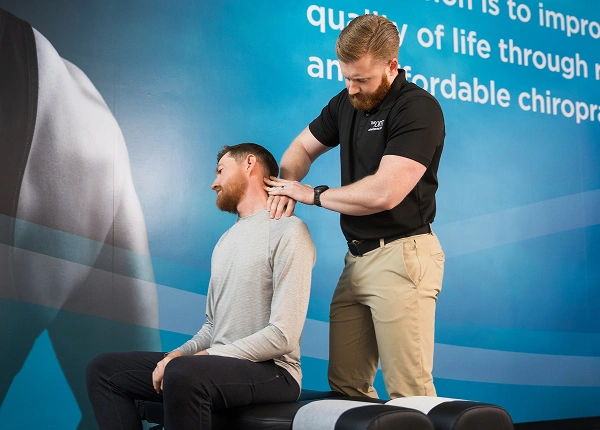
While chiropractic care is not a cure for sleep disorders, it may help address musculoskeletal issues that make restful sleep harder to achieve. During an appointment, licensed chiropractors assess areas of stiffness, restricted movement, and postural strain that may be contributing to discomfort. Gentle adjustments, mobility support, and soft tissue techniques may help your body feel more comfortable at night and less sore in the morning.

Step 1: Understanding What May Be Disrupting Your Sleep

To help support better sleep, chiropractors identify and address:

  • Neck stiffness and soreness that makes it hard to get comfortable
  • Back pain or pressure that causes discomfort when lying down
  • Muscle tension in the shoulders, back, or hips that keeps your body from relaxing
  • Restricted spinal or joint motion that may affect posture and sleeping position
  • Everyday physical stress that may place added strain on your body and nervous system

Step 2: How Chiropractic May Help

  • Gentle spinal adjustments may help improve motion and reduce tension in areas that feel stiff or restricted.
  • Soft-tissue techniques may help relax tight muscles in your neck, shoulders, and back so your body feels less tense at the end of the day.
  • Posture and movement guidance may help reduce the daily strain that contributes to discomfort at night.
  • Supporting healthy spinal alignment may help your body feel more balanced and comfortable in resting positions.
  • Chiropractic care may also help support healthy nervous system function, which plays an important role in relaxation, recovery, and sleep quality.

Step 3: Potential Benefits Of Care

When physical discomfort is affecting sleep, chiropractic care may offer benefits that support better sleep, including:

  • Less neck and back discomfort at bedtime
  • Reduced muscle tension and physical stress
  • Improved mobility and comfort in resting positions
  • Support for healthy spinal alignment and body mechanics
  • Better overall physical support for more restful sleep
  • Less morning stiffness and soreness

Find A Chiropractor Near You

Walk in for quality, affordable care that fits your schedule. Enjoy hassle-free visits and same-day relief.

Nearby Clinics

Chiropractors Supporting Better Sleep

Frequently Asked Questions About Sleep

For many people, sleeping on the side with a pillow between the knees or on the back with a pillow under the knees may help reduce pressure on the lower back. The best sleep position often depends on where you feel discomfort and how supported your body feels. In general, the goal is to keep your spine in a more neutral position and avoid twisting or sinking into awkward angles overnight.

Lower back pain in the morning may happen when your sleep position, mattress support, muscle tension, or spinal stiffness places extra stress on your back overnight. For some people, back pain while sleeping becomes more noticeable after staying in one position for too long. If it keeps happening, it may help to look at posture, mobility, and whether an underlying musculoskeletal issue is contributing.

They may help some people sleep better by reducing physical discomfort that interferes with rest. When people search for information about chiropractic and sleep, they are often looking for ways to ease neck pain, back pain, tension, and stiffness that make it hard to get comfortable. Chiropractic care may help improve mobility, ease muscular stress, and support healthier spinal alignment. Chiropractic adjustments may also help support healthy nervous system function, which plays a role in rest and recovery. It is not a cure for sleep disorders, but it may help address physical barriers to more restful sleep.

Neck discomfort, joint restriction, and poor sleep posture may all affect how easily you fall asleep or stay asleep. If your neck feels strained, tight, or unsupported, it may be harder to get comfortable and easier to wake up sore. A chiropractor may help assess whether posture, alignment, or muscle tension could be contributing.

Sleeping on your stomach is often the most uncomfortable position for people with neck or back issues because it may put extra strain on the spine and require your head to stay turned for long periods. That said, the worst position is usually the one that leaves your body feeling sore, stiff, or unsupported. Comfort and alignment both matter.

Your sleep position affects how your head, neck, and spine are supported for hours at a time. If your pillow is too high, too flat, or your head is turned awkwardly, your neck joints and muscles may stay under tension through the night. That may lead to stiffness, soreness, or headaches when you wake up.

Poor sleep can make your body feel more sensitive to discomfort and may affect how well you recover from daily stress and strain. When you are not sleeping well, aches and pains may feel more noticeable the next day, which can create a frustrating cycle between pain and poor rest.

Sometimes sleep helps because your body is no longer under the same pressure, movement, or activity demands as it is during the day. Rest may also help calm irritated muscles and joints. But if pain keeps returning after sleep or feels worse in the morning, it may be a sign that posture, alignment, or another physical issue needs attention.

A wedge pillow may help some people feel more supported, especially if lying flat feels uncomfortable. The key is whether it keeps your spine in a comfortable position without adding strain elsewhere. If you wake up with more discomfort, it may be worth adjusting your setup.

Many people with chronic pain sleep better by using supportive pillows, choosing positions that reduce pressure, and creating routines that help the body relax before bed. Managing physical discomfort during the day may also help nights feel easier. If pain is affecting sleep regularly, getting professional guidance may help you find better long-term strategies.

Common signs include daytime fatigue, brain fog, irritability, trouble concentrating, low energy, and feeling like sleep did not leave you refreshed. Some people also notice more tension, soreness, or slower recovery when they are not sleeping well. If you wake up tired most mornings, your sleep quality may need attention.

Sleep needs vary, but most adults need around seven to nine hours of sleep each night. Teenagers and children typically need more. While the number matters, sleep quality matters too. Even if you are in bed long enough, discomfort or frequent waking may still leave you feeling unrested.

Regular movement may help support better sleep by reducing stress, improving mood, and helping your body feel more ready for rest at the end of the day. If you are looking for how to get better sleep, consistent movement is one habit that may help. The timing and intensity matter for some people, though. If intense late-night workouts leave you feeling wired, earlier movement may be a better fit.

Some people look to supplements like magnesium for sleep or melatonin for added support, but what helps depends on the person and the reason sleep is disrupted. Supplements may be worth discussing with a qualified healthcare provider, especially if sleep issues are ongoing. If pain, tension, or discomfort are part of the problem, physical care may matter too.

For some people, side sleeping feels more supportive and comfortable than other positions. Sleeping on your left side may be helpful in certain situations, but there is no universal best side for everyone. What matters most is whether your body feels supported and whether your neck and spine stay in a more neutral position.

RELATED READS ABOUT SLEEP
Testimonial

How Shanell Found Her Way Back to Yoga,
Better Sleep, and Everyday Comfort

Shanell lives a healthy, active life built around movement. As a hot yoga instructor, fitness model, and regular hiker, her week includes teaching about 10 yoga classes, strength training, and time outdoors. But when low back pain, and later a neck injury, disrupted her routine, it affected more than workouts. It kept her from practicing yoga, going to the gym, teaching the classes she loved, and getting the rest she needed to recover. After starting regular visits at The Joint Chiropractic, Shanell found support that helped her return to work, move more comfortably, sleep better, and feel better day to day. For her, chiropractic care helps support a strong spine, healthy hips, and the active routine she loves, with the peace of mind of knowing care is there when she needs it.

1. Centers for Disease Control and Prevention. (2016, February 16). 1 in 3 adults don’t get enough sleep. Centers for Disease Control and Prevention. https://archive.cdc.gov/www_cdc_gov/media/releases/2016/p0215-enough-sleep.html

2. U.S. National Library of Medicine. (2011, May 20). Prevalence of sleep disturbance in patients with low back pain. National Center for Biotechnology Information. https://pubmed.ncbi.nlm.nih.gov/21190045/

3. Suni, E. (2025, July 10). 100+ Sleep Statistics. Sleep Foundation. https://www.sleepfoundation.org/how-sleep-works/sleep-factsstatistics

Download your offer today and save!

Offer valued at $45. Valid for new patients only. See clinic for chiropractor(s)' name and license info. Clinics managed and/or owned by franchisee or Prof. Corps. Restrictions may apply to Medicare eligible patients. Individual results may vary.